
Blog
Premier Yacht Management Services Across Fort Lauderdale and South Florida
Blog
Premier Yacht Management Services Across Fort Lauderdale and South Florida
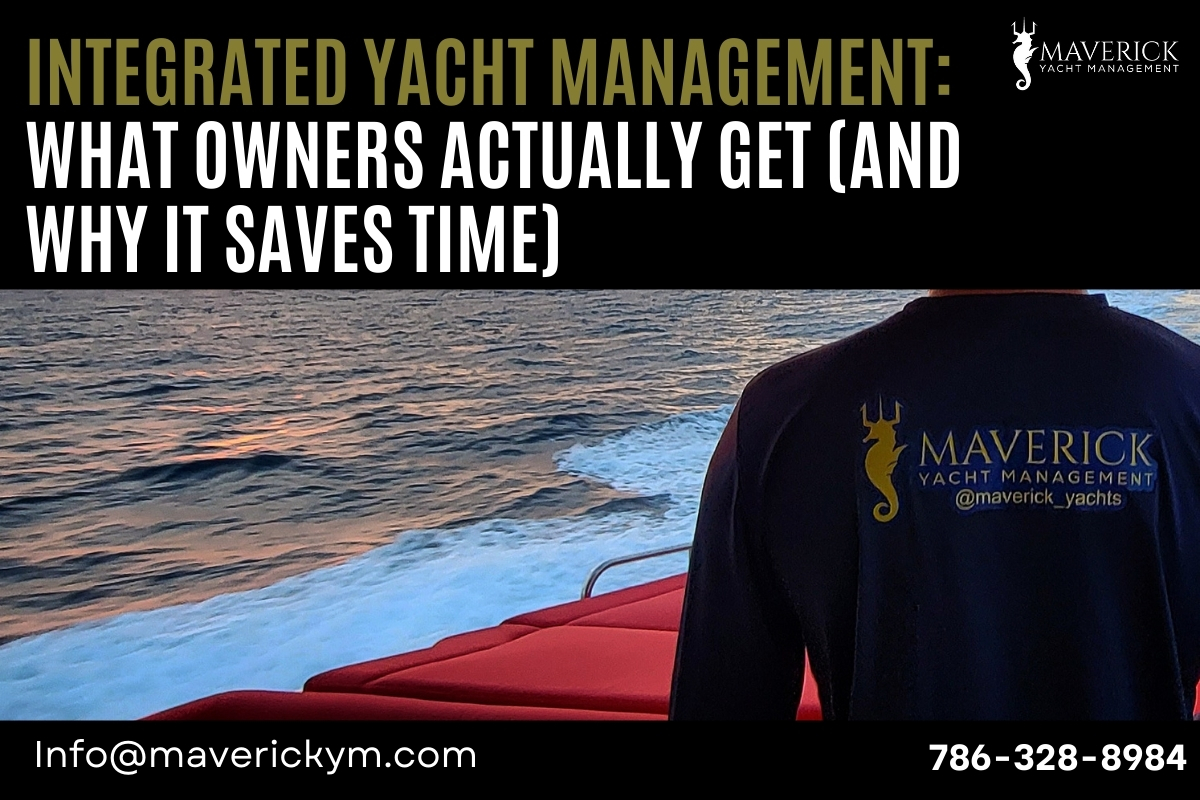
Integrated Yacht Management: What Owners Actually Get (and Why It Saves Time)
Yacht ownership now involves far more than seasonal cruising and basic upkeep. Owners manage complex operations that include crew oversight, regulatory demands, financial control, and constant coordination. Expectations have changed as well.
Owners want fewer interruptions, clearer reporting, and confidence that operations stay under control without daily involvement.
Modern ownership places a premium on time and focus. Phone calls, approvals, and last minute issues quickly erode that value. Traditional management structures often react to problems instead of preventing them. Owners now expect a system that works in the background while keeping risk low and visibility high.
Integrated yacht management reflects this shift. Owners seek structure, accountability, and continuity rather than fragmented support. Management today must simplify ownership instead of adding complexity.
What Is Integrated Yacht Management? In Plain Terms
Integrated yacht management describes a coordinated way to run every aspect of a yacht through one clear operational structure. Ownership involves crew oversight, technical care, regulatory responsibility, and financial control. Separate providers often handle each area, which creates gaps, delays, and extra work for owners.
Integration connects all functions so information flows through one management team. Owners gain visibility without chasing updates or resolving conflicts between vendors. Coordination replaces fragmentation, and planning replaces reaction. Management supports daily operations while protecting long term value and owner time.
Central operational oversight
One management structure supervises crew, technical matters, compliance, and finances through a single point of coordination.Clear accountability
Responsibility sits with one team instead of multiple providers, which reduces confusion and delays.Consistent reporting
Owners receive clear updates that support decisions without constant involvement.Proactive planning
Maintenance, staffing, and compliance follow planned schedules rather than last minute responses.Aligned standards
Vendors, crew, and partners operate under shared expectations and procedures.
Traditional management relies on separate services working independently. Integrated management aligns every function under one strategy, which simplifies ownership and reduces time spent managing details.
What Owners Get From Integrated Yacht Management Services
Integrated management gives owners a structured operating environment instead of scattered support. Each responsibility connects through one management framework that reduces involvement while maintaining control. Owners gain clarity across operations, people, compliance, and finances without chasing updates or coordinating vendors.
1. Yacht Operations and Ongoing Oversight
Daily yacht activity involves logistics, scheduling, supplier coordination, and onboard planning. Integrated oversight ensures smooth execution aligned with cruising plans and owner preferences. Management teams handle coordination so owners avoid constant decisions and operational interruptions.
Operational coordination
Voyage logistics, scheduling, and onboard activities follow a unified operational plan.Owner representation
Management teams act on owner instructions during routine operational and logistical matters.
2. Crew Administration and Payroll Support
Crew management affects safety, service quality, and onboard stability. Integrated administration provides structure around employment, expectations, and performance. Owners avoid direct involvement in crew logistics while maintaining oversight.
Crew administration
Contracts, payroll, rotations, and documentation remain organized, compliant, and consistently maintained.Performance structure
Clear management processes support accountability, crew stability, and professional onboard standards.
3. Technical Oversight and Maintenance Planning
Technical reliability protects safety and asset value. Integrated planning prioritizes preventive maintenance and structured oversight. Owners gain confidence that technical matters remain controlled without constant supervision.
Planned maintenance
Maintenance schedules align with usage patterns and long term ownership objectives.Vendor coordination
Specialist contractors operate under centralized oversight and clearly defined technical priorities.
4. Regulatory and Safety Compliance
Regulatory responsibilities require accuracy and continuity. Integrated oversight manages certification, inspections, and safety requirements through one coordinated system. Owners reduce exposure to compliance risk.
Regulatory coordination
Flag, class, and certification requirements remain current through structured compliance management.Safety framework support
Operational procedures align with international safety standards and regulatory expectations.
5. Financial Oversight and Reporting
Financial clarity supports confident ownership decisions. Integrated accounting tracks spending, forecasts costs, and delivers meaningful reporting without overwhelming detail.
Budget visibility
Financial planning aligns expenditure with approved budgets and ownership priorities.Clear reporting
Owners receive concise financial insight without reviewing complex accounting data.
Why Integrated Yacht Management Saves Owners Time
Time loss in yacht ownership rarely comes from cruising. Coordination failures, unclear responsibility, and reactive decisions consume attention and energy. Owners often manage problems created by fragmented systems rather than real operational needs.
Single coordination point
One management structure handles communication across crew, suppliers, and regulatory authorities.Planned decision cycles
Approvals follow structured timelines instead of frequent urgent interruptions.Reduced emergency responses
Preventive oversight limits unexpected issues that demand immediate owner attention.
Time savings build through consistency. Fewer calls reduce decision fatigue. Clear structure removes friction from ownership. Owners regain focus because management resolves issues before escalation and preserves time for priorities beyond operations.
The Hidden Cost of Managing a Yacht Without Integration
Managing a yacht through separate advisors and disconnected services often appears flexible and cost conscious. Reality looks different once ownership settles into day to day operation. Fragmented support creates invisible strain that rarely shows up on balance sheets. Owners spend time aligning information, resolving conflicts, and filling gaps between providers. Control feels close, yet effort increases steadily.
Lack of integration shifts responsibility back to ownership. Each decision requires more context, more follow up, and more attention. Problems rarely come from one major failure. Small inefficiencies compound until ownership feels reactive rather than enjoyable. Costs surface through lost time, rising stress, and growing exposure rather than invoices alone.
Time erosion
Time lost coordinating multiple advisors and vendors instead of enjoying seamless operational continuity.Decision fatigue
Decision fatigue increases as owners approve routine matters without structured guidance or clear context.Operational risk
Risk exposure grows when compliance maintenance and finances operate without unified oversight.
Who Integrated Yacht Management Is Best Suited For
Integrated management suits owners who value clarity and consistency over hands on control. Ownership structures vary, yet certain situations benefit most from coordinated oversight.
Alignment matters more than yacht size or usage frequency. Owners seeking fewer interruptions and better visibility often recognize immediate value.
Private owners prioritizing simplicity
Private owners seeking reduced involvement while maintaining confidence across daily yacht operations.First time yacht owners
New owners navigating operational complexity without prior experience managing crew compliance and maintenance.Busy principals or families
Owners balancing demanding schedules who prefer structured oversight instead of constant operational decisions.Family offices and representatives
Representatives require clear reporting governance and accountability without direct operational involvement.
What to Look for in a Superyacht Management Company
Choosing a management company shapes how ownership feels over time. Strong providers reduce involvement while protecting control. Evaluation should focus on structure, accountability, and communication rather than brand size or marketing language.
Decision making becomes easier when management systems stay clear and consistent. Owners benefit most from partners who manage complexity quietly and keep information practical.
Integrated operational structure
Ability to oversee crew compliance finance and operations through one coordinated management framework.Clear accountability model
Defined ownership representation with responsibility for outcomes communication and operational decisions.Transparent reporting systems
Reporting delivers relevant insight without excessive detail delays or unnecessary financial complexity.Proactive planning capability
Demonstrated focus on prevention maintenance scheduling and long term operational planning.Owner focused communication
Communication style respects time, supports clarity and avoids constant operational interruptions.
Integrated Yacht Management as Owner Leverage, Not Overhead
Integrated management changes ownership from constant oversight to confident control. Structure replaces fragmentation while planning replaces reaction. Owners gain visibility without daily involvement and regain time once lost to coordination. Management works best when systems run quietly and decisions arrive with context.
Ownership should feel purposeful and rewarding rather than demanding. Integrated support protects time while preserving long term value and operational stability. Owners seeking clarity and simplicity benefit most from aligned management structures.
For owners considering a more structured approach, Maverick Yacht Management offers guidance built around clarity, accountability and time efficiency. Conversations start with understanding ownership goals and building systems that support them.
FAQs
What does integrated yacht management actually include?
Integrated management brings operations crew oversight technical planning compliance coordination and financial reporting into one structured framework managed through a single team.How does integrated management differ from traditional yacht management?
Traditional models separate services across multiple providers. Integrated management connects every function through one coordinated system that improves consistency and reduces owner involvement.Does integrated yacht management reduce owner control?
Integrated oversight strengthens control through clear reporting, defined accountability and structured decision support without daily operational involvement.Is integrated yacht management suitable for private non charter yachts?
Private ownership benefits from integration because crew operations maintenance planning and compliance still demand constant coordination regardless of charter activity.When should an owner consider moving to integrated management?
Owners often consider integration once time pressure increases, operational complexity grows or fragmented support causes recurring issues and decision fatigue.

Integrated Yacht Management: What Owners Actually Get (and Why It Saves Time)
Yacht ownership now involves far more than seasonal cruising and basic upkeep. Owners manage complex operations that include crew oversight, regulatory demands, financial control, and constant coordination. Expectations have changed as well.
Owners want fewer interruptions, clearer reporting, and confidence that operations stay under control without daily involvement.
Modern ownership places a premium on time and focus. Phone calls, approvals, and last minute issues quickly erode that value. Traditional management structures often react to problems instead of preventing them. Owners now expect a system that works in the background while keeping risk low and visibility high.
Integrated yacht management reflects this shift. Owners seek structure, accountability, and continuity rather than fragmented support. Management today must simplify ownership instead of adding complexity.
What Is Integrated Yacht Management? In Plain Terms
Integrated yacht management describes a coordinated way to run every aspect of a yacht through one clear operational structure. Ownership involves crew oversight, technical care, regulatory responsibility, and financial control. Separate providers often handle each area, which creates gaps, delays, and extra work for owners.
Integration connects all functions so information flows through one management team. Owners gain visibility without chasing updates or resolving conflicts between vendors. Coordination replaces fragmentation, and planning replaces reaction. Management supports daily operations while protecting long term value and owner time.
Central operational oversight
One management structure supervises crew, technical matters, compliance, and finances through a single point of coordination.Clear accountability
Responsibility sits with one team instead of multiple providers, which reduces confusion and delays.Consistent reporting
Owners receive clear updates that support decisions without constant involvement.Proactive planning
Maintenance, staffing, and compliance follow planned schedules rather than last minute responses.Aligned standards
Vendors, crew, and partners operate under shared expectations and procedures.
Traditional management relies on separate services working independently. Integrated management aligns every function under one strategy, which simplifies ownership and reduces time spent managing details.
What Owners Get From Integrated Yacht Management Services
Integrated management gives owners a structured operating environment instead of scattered support. Each responsibility connects through one management framework that reduces involvement while maintaining control. Owners gain clarity across operations, people, compliance, and finances without chasing updates or coordinating vendors.
1. Yacht Operations and Ongoing Oversight
Daily yacht activity involves logistics, scheduling, supplier coordination, and onboard planning. Integrated oversight ensures smooth execution aligned with cruising plans and owner preferences. Management teams handle coordination so owners avoid constant decisions and operational interruptions.
Operational coordination
Voyage logistics, scheduling, and onboard activities follow a unified operational plan.Owner representation
Management teams act on owner instructions during routine operational and logistical matters.
2. Crew Administration and Payroll Support
Crew management affects safety, service quality, and onboard stability. Integrated administration provides structure around employment, expectations, and performance. Owners avoid direct involvement in crew logistics while maintaining oversight.
Crew administration
Contracts, payroll, rotations, and documentation remain organized, compliant, and consistently maintained.Performance structure
Clear management processes support accountability, crew stability, and professional onboard standards.
3. Technical Oversight and Maintenance Planning
Technical reliability protects safety and asset value. Integrated planning prioritizes preventive maintenance and structured oversight. Owners gain confidence that technical matters remain controlled without constant supervision.
Planned maintenance
Maintenance schedules align with usage patterns and long term ownership objectives.Vendor coordination
Specialist contractors operate under centralized oversight and clearly defined technical priorities.
4. Regulatory and Safety Compliance
Regulatory responsibilities require accuracy and continuity. Integrated oversight manages certification, inspections, and safety requirements through one coordinated system. Owners reduce exposure to compliance risk.
Regulatory coordination
Flag, class, and certification requirements remain current through structured compliance management.Safety framework support
Operational procedures align with international safety standards and regulatory expectations.
5. Financial Oversight and Reporting
Financial clarity supports confident ownership decisions. Integrated accounting tracks spending, forecasts costs, and delivers meaningful reporting without overwhelming detail.
Budget visibility
Financial planning aligns expenditure with approved budgets and ownership priorities.Clear reporting
Owners receive concise financial insight without reviewing complex accounting data.
Why Integrated Yacht Management Saves Owners Time
Time loss in yacht ownership rarely comes from cruising. Coordination failures, unclear responsibility, and reactive decisions consume attention and energy. Owners often manage problems created by fragmented systems rather than real operational needs.
Single coordination point
One management structure handles communication across crew, suppliers, and regulatory authorities.Planned decision cycles
Approvals follow structured timelines instead of frequent urgent interruptions.Reduced emergency responses
Preventive oversight limits unexpected issues that demand immediate owner attention.
Time savings build through consistency. Fewer calls reduce decision fatigue. Clear structure removes friction from ownership. Owners regain focus because management resolves issues before escalation and preserves time for priorities beyond operations.
The Hidden Cost of Managing a Yacht Without Integration
Managing a yacht through separate advisors and disconnected services often appears flexible and cost conscious. Reality looks different once ownership settles into day to day operation. Fragmented support creates invisible strain that rarely shows up on balance sheets. Owners spend time aligning information, resolving conflicts, and filling gaps between providers. Control feels close, yet effort increases steadily.
Lack of integration shifts responsibility back to ownership. Each decision requires more context, more follow up, and more attention. Problems rarely come from one major failure. Small inefficiencies compound until ownership feels reactive rather than enjoyable. Costs surface through lost time, rising stress, and growing exposure rather than invoices alone.
Time erosion
Time lost coordinating multiple advisors and vendors instead of enjoying seamless operational continuity.Decision fatigue
Decision fatigue increases as owners approve routine matters without structured guidance or clear context.Operational risk
Risk exposure grows when compliance maintenance and finances operate without unified oversight.
Who Integrated Yacht Management Is Best Suited For
Integrated management suits owners who value clarity and consistency over hands on control. Ownership structures vary, yet certain situations benefit most from coordinated oversight.
Alignment matters more than yacht size or usage frequency. Owners seeking fewer interruptions and better visibility often recognize immediate value.
Private owners prioritizing simplicity
Private owners seeking reduced involvement while maintaining confidence across daily yacht operations.First time yacht owners
New owners navigating operational complexity without prior experience managing crew compliance and maintenance.Busy principals or families
Owners balancing demanding schedules who prefer structured oversight instead of constant operational decisions.Family offices and representatives
Representatives require clear reporting governance and accountability without direct operational involvement.
What to Look for in a Superyacht Management Company
Choosing a management company shapes how ownership feels over time. Strong providers reduce involvement while protecting control. Evaluation should focus on structure, accountability, and communication rather than brand size or marketing language.
Decision making becomes easier when management systems stay clear and consistent. Owners benefit most from partners who manage complexity quietly and keep information practical.
Integrated operational structure
Ability to oversee crew compliance finance and operations through one coordinated management framework.Clear accountability model
Defined ownership representation with responsibility for outcomes communication and operational decisions.Transparent reporting systems
Reporting delivers relevant insight without excessive detail delays or unnecessary financial complexity.Proactive planning capability
Demonstrated focus on prevention maintenance scheduling and long term operational planning.Owner focused communication
Communication style respects time, supports clarity and avoids constant operational interruptions.
Integrated Yacht Management as Owner Leverage, Not Overhead
Integrated management changes ownership from constant oversight to confident control. Structure replaces fragmentation while planning replaces reaction. Owners gain visibility without daily involvement and regain time once lost to coordination. Management works best when systems run quietly and decisions arrive with context.
Ownership should feel purposeful and rewarding rather than demanding. Integrated support protects time while preserving long term value and operational stability. Owners seeking clarity and simplicity benefit most from aligned management structures.
For owners considering a more structured approach, Maverick Yacht Management offers guidance built around clarity, accountability and time efficiency. Conversations start with understanding ownership goals and building systems that support them.
FAQs
What does integrated yacht management actually include?
Integrated management brings operations crew oversight technical planning compliance coordination and financial reporting into one structured framework managed through a single team.How does integrated management differ from traditional yacht management?
Traditional models separate services across multiple providers. Integrated management connects every function through one coordinated system that improves consistency and reduces owner involvement.Does integrated yacht management reduce owner control?
Integrated oversight strengthens control through clear reporting, defined accountability and structured decision support without daily operational involvement.Is integrated yacht management suitable for private non charter yachts?
Private ownership benefits from integration because crew operations maintenance planning and compliance still demand constant coordination regardless of charter activity.When should an owner consider moving to integrated management?
Owners often consider integration once time pressure increases, operational complexity grows or fragmented support causes recurring issues and decision fatigue.

Schedule Your Free Systems Check!
Schedule Your Free Systems Check!
Services
Contact Us
Address
Business Hours: Monday - Friday
9:00AM - 5:00PM


