
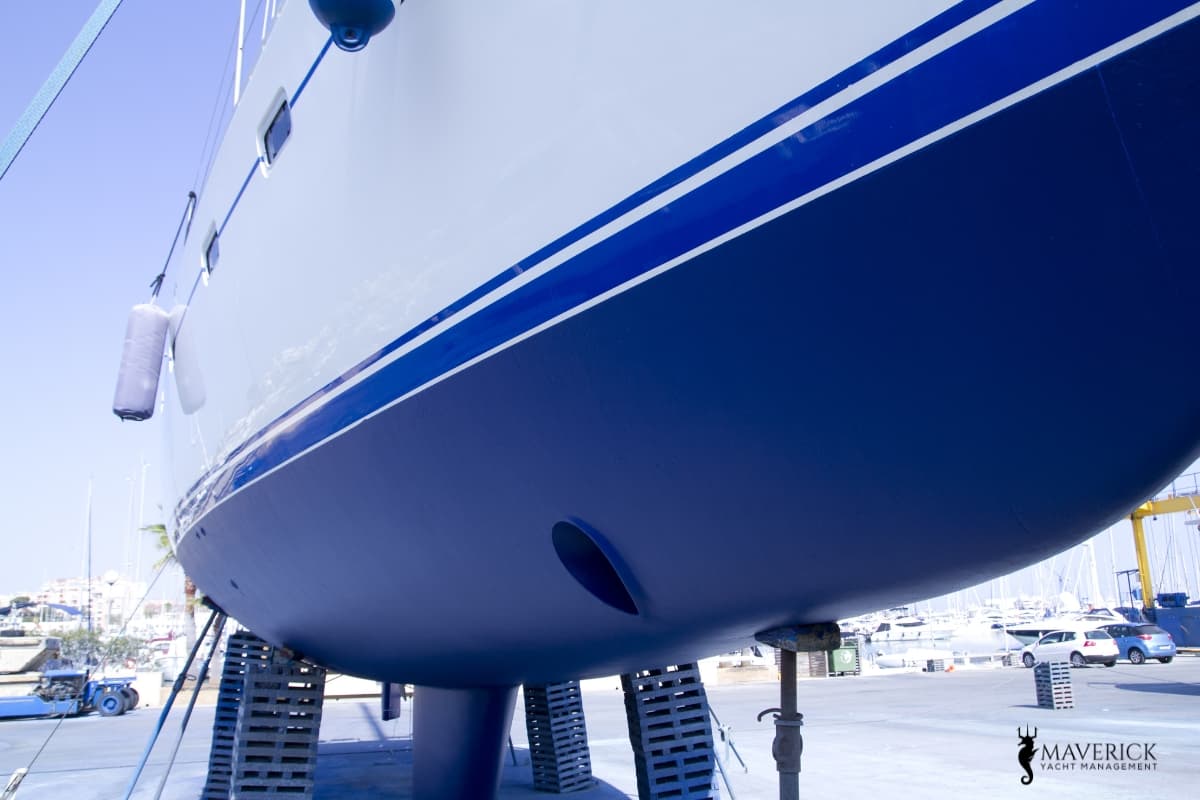
Antifouling in South Florida: The Bottom Painting Schedule Fort Lauderdale Captains Follow to Protect Hull Performance
Fort Lauderdale's waterways are exceptional for cruising — warm, clear, and open year-round. For yacht hulls sitting in those same waters between trips, conditions are considerably less forgiving. South Florida's warm, nutrient-rich marine environment accelerates biofouling at a pace that routinely surprises owners accustomed to northern boating conditions, and antifouling schedules that work elsewhere simply do not translate to what hulls face here.
Proper antifouling service in Fort Lauderdale is not a matter of following general guidance — it requires an approach calibrated to South Florida's specific water temperatures, tidal patterns, and marine growth cycles. Professional captains and management teams who oversee vessels in Fort Lauderdale year-round have built service schedules around what actually happens to unprotected hulls in this environment, not what paint manufacturer labels assume.
Why South Florida's Waters Demand a Different Approach
Biofouling in South Florida is a year-round event, not a seasonal one. Water temperatures along Fort Lauderdale's coastline and Intracoastal Waterway rarely drop below 70 degrees Fahrenheit even in winter — conditions that allow barnacle larvae, bryozoans, and algae to settle and attach on unprotected hull surfaces at rates that would be considered aggressive even during peak summer further north.
Paint systems rated for 12 to 18 months of effective coverage in cooler climates frequently reach functional depletion within 8 to 10 months in South Florida. Owners who set their haul-out and repaint schedule based on manufacturer recommendations written for temperate conditions regularly find meaningful growth already established on their hulls before service was anticipated.
Vessels moored in warmer, shallower inshore water or near marina infrastructure — where nutrient levels are higher — experience even faster fouling cycles than offshore-docked counterparts. Location matters here as much as time.
The Hull Maintenance Schedule Fort Lauderdale Captains Actually Follow
For vessels managed by professional captains and management programs in Fort Lauderdale, hull maintenance scheduling follows a cadence built around South Florida's marine calendar rather than a generic 12-month cycle.
Annual haul-out with adjusted timing. Most professionally managed Fort Lauderdale vessels are hauled annually, but the scheduling window is calibrated differently than northern practice. Targeting a haul-out between October and February — when water temperatures are marginally cooler and growth rates slow slightly — gives fresh antifouling paint its best window for full-season coverage heading into the high-use spring and summer months.
Pre-summer underwater inspection. A professional underwater inspection in March or April, before summer demand peaks, confirms whether the current paint system has adequate protective life remaining through peak season or whether an early haul-out is warranted. Catching a depleted antifouling coat before summer rather than discovering drag and fuel consumption losses mid-season is the difference between a scheduled service and an unplanned expense.
Mid-cycle hull cleaning. Diver-performed hull cleaning between haul-outs removes soft growth and biofilm that accumulates on ablative coatings over time. On a properly painted hull, cleaning every 60 to 90 days maintains performance without compromising the antifouling coat's remaining biocide load. Cleaning frequency is adjusted based on how often the vessel is used, slip location, and the specific paint system applied.
Post-hurricane season assessment. Following hurricane season, a full underwater inspection confirms hull integrity, evaluates running gear condition, and assesses whether storm activity, additional dock time, or reduced vessel movement has accelerated growth to a point requiring earlier-than-scheduled haul-out attention.
Choosing the Right Antifouling System for Fort Lauderdale Conditions
Paint selection matters as much as scheduling for biofouling prevention in South Florida. Applying a paint system designed for a vessel's actual usage pattern — rather than a product selected on price or general reputation — directly determines how long protection holds between haul-outs.
Ablative paints are generally the preferred choice for Fort Lauderdale vessels in regular use. Biocide release tied to hull movement through water aligns protection delivery with actual vessel activity, extending effective coverage on active boats and preventing excessive release on those used less frequently.
Hard paints release biocide through water contact regardless of vessel movement, making depletion rates less predictable in South Florida's warm water. Build-up from successive hard paint applications also creates a removal obligation at future haul-outs, adding cost and prep time that compounds over multiple seasons.
Copper-free formulations have advanced considerably in recent years and are worth evaluating, particularly as Florida's environmental regulatory landscape continues evolving around copper-based antifouling products in nearshore and intracoastal waters. Performance in South Florida conditions varies by product and requires application by crews familiar with proper surface preparation for these systems.
What a Missed Service Window Actually Costs
Deferring boat bottom cleaning in Fort Lauderdale beyond the proper window does not simply mean a dirty hull. Each component of the cost chain compounds independently.
Fuel consumption on a fouled hull increases 20 to 30 percent under sustained drag from accumulated growth — an expense that runs invisibly across every hour underway until the hull is cleaned. Engine load increases with drag, accelerating wear on components already working harder than designed. Marine growth around shaft seals, propellers, and cutlass bearings creates additional maintenance needs discovered at the haul-out that a clean hull inspection would have found earlier and addressed more economically.
Resale and survey impact arrive last — but land hardest. A hull with visible growth, documented maintenance gaps, or deferred haul-out history telegraphs ownership quality to buyers and surveyors before a single system is inspected.
How Professional Management Keeps Hull Maintenance on Schedule
Remote and absentee yacht owners face a specific challenge with hull maintenance scheduling: without professional oversight, intervals drift. A haul-out scheduled for October becomes December. An underwater inspection planned for spring does not happen because no one is tracking it.
Johann Faubel and the Maverick Yacht Management team build hull maintenance schedules into each managed vessel's annual service calendar from the start — with haul-out scheduling initiated months in advance of need, underwater inspection appointments coordinated between haul-outs, and paint system selection reviewed at each service event based on how the vessel has been used and where growth has concentrated. Owners enrolled in Maverick's Platinum Management Program receive a vessel whose hull maintenance is running on a documented, professional schedule — not catching up to one.
Yacht maintenance coordination that keeps hull protection current also feeds directly into storm season preparation. Vessels with documented underwater service history and properly maintained hull coatings enter hurricane season in better structural position — and with the service records that support insurance documentation when conditions require it.
Contact Maverick Yacht Management to schedule antifouling service or discuss a managed hull maintenance program for your Fort Lauderdale vessel.
Frequently Asked Questions
How often should antifouling service be performed on a Fort Lauderdale yacht?
Most Fort Lauderdale vessels require full haul-out and antifouling repainting annually, with the optimal window typically falling between October and February ahead of peak-season use. In addition to the annual haul-out, professional underwater hull cleaning every 60 to 90 days maintains paint performance and removes soft growth between service intervals. Vessels moored in warmer, shallower inshore locations may require more frequent attention.
What is the best antifouling paint for South Florida conditions?
Ablative (self-polishing) antifouling systems are generally preferred for active Fort Lauderdale vessels because biocide release tracks with vessel movement rather than depleting at a fixed rate. Choosing between ablative formulations, hard paints, or copper-free alternatives depends on the vessel's specific usage pattern, slip location, and haul-out frequency — factors best evaluated with a management team familiar with Fort Lauderdale's marine environment.
How does biofouling affect boat performance and fuel consumption?
Accumulated marine growth creates sustained drag across the entire submerged hull surface, increasing fuel consumption by 20 to 30 percent on heavily fouled vessels compared to a clean hull baseline. Beyond fuel costs, fouling increases load on propulsion systems, accelerates wear on running gear components, and can reduce top speed and maneuverability to a degree that becomes noticeable within a single season of deferred maintenance.
What does a professional bottom cleaning in Fort Lauderdale include?
Professional hull cleaning involves diver-performed removal of accumulated soft growth and biofilm from the hull surface, running gear inspection, propeller cleaning and inspection, and condition reporting on the state of the existing antifouling coat. Quality hull cleaning programs include documentation of growth patterns and paint wear that informs haul-out scheduling and paint system decisions for the next service interval.
Why do Fort Lauderdale vessels need antifouling service more often than boats in northern climates?
Water temperature is the primary driver. South Florida's inshore and intracoastal waters stay warm enough year-round to support active barnacle larvae settlement and algae growth, while northern waters experience winter temperature drops that significantly slow fouling cycles. Antifouling paint formulations calibrated for 12-to-18-month performance windows in cooler climates typically reach effective depletion in 8 to 10 months in South Florida conditions.
Need help with your vessel?
Maverick offers free on-vessel inspections. We walk your boat, assess her condition, and send you a plan — no obligation.
Talk to a captain, not a call center.
Free vessel assessments. No commitment.
Request an Inspection (954) 799-5870