
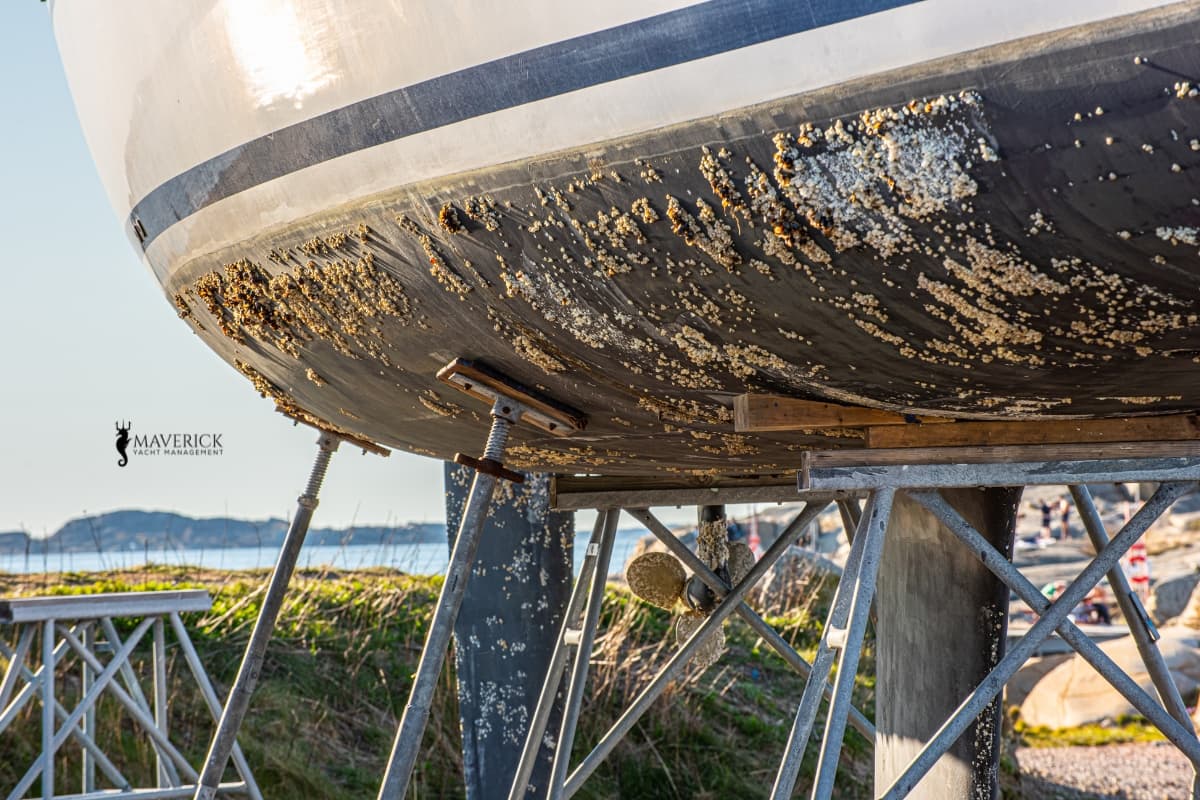
Antifouling Service in Fort Lauderdale: Stop Hull Damage Before It Starts
A hull sitting in warm South Florida water is under attack from its first day in the marina. Marine growth starts within hours, and the damage it causes builds quietly below the waterline where no owner is looking. Stopping it early costs a fraction of repairing it later.
Prevention is the entire game with a fouled hull. Strong biofouling prevention Miami FL owners depend on keeps the boat fast, protects the gelcoat and running gear, and avoids repair bills that climb into five figures. Waiting for visible growth means the damage has already begun.
Understanding what actually happens under the waterline makes the case for acting early obvious. Every form of hull damage below traces back to the same source, which is growth left alone long enough to take hold. Prevention, in other words, is not an upsell but the cheapest maintenance a South Florida hull can get.
What Biofouling Actually Is
Biofouling is more than a dirty bottom. According to the International Maritime Organization, fouling begins almost immediately when a hull enters the water, as bacteria and micro-algae form a slime layer within hours. Larger organisms follow fast.
Growth builds in predictable stages. A thin biofilm gives way to soft weed, and weed gives way to hard barnacles, mussels, and tubeworms that lock onto the hull and running gear. Each stage makes the next one worse.
South Florida speeds every step. Warm water year-round means the fouling season never really ends. A hull in Miami or Fort Lauderdale grows a fouling community far faster than one in cooler northern water. Constant warmth is constant growth.
Why Miami and South Florida Hulls Foul Fastest
Water temperature drives the whole process. Marine organisms thrive in the warm, nutrient-rich water that surrounds Miami and Fort Lauderdale for most of the year. A few quiet weeks at the dock become a thriving colony.
Idle time makes it worse. A boat that sits between uses gives barnacles and weed an undisturbed surface to settle on, and a hull that rarely moves fouls faster than one regularly underway. Stillness invites growth.
Biofouling prevention in Miami FL therefore matters more than almost anywhere in the country. A protection schedule that might stretch for years up north needs far tighter timing in South Florida heat. Local conditions set the pace.
The Hull Damage You Cannot See Coming
Fouling does far more than slow a boat down. Barnacles and hard growth etch into gelcoat and bare metal, leaving pits and scars that outlast the growth itself. Colonies inside raw-water intakes choke the flow an engine needs to stay cool.
Warm water attacks the hull from another direction. As West Marine explains, osmotic blisters form when water works through the gelcoat into the laminate, a problem far more common on boats kept in warm water. Left alone, those blisters can delaminate and damage the hull structure.
Metal underwater pays a price too. Running gear, shafts, and props suffer accelerated corrosion when fouling and galvanic activity combine, and Professional BoatBuilder details how quickly stray current and galvanic corrosion eat unprotected metal. Neglect below the waterline rarely stays cheap.
Drag, Fuel, and Engine Strain
Performance is the first casualty of a fouled hull. Even a thin slime layer roughens the surface enough to increase drag, and that added roughness drives up fuel consumption across a boat's operation. Hard growth multiplies the penalty.
Your engine feels every bit of it. Pushing a fouled hull through the water forces the engine to work harder for less speed. More fuel burns, and hours of needless strain pile onto the machinery. Wasted energy becomes wasted money.
Handling suffers alongside speed. A clean hull turns, tracks, and planes the way the designer intended, while a fouled one grows sluggish and unpredictable in exactly the conditions where response matters. Fouling steals the fun of driving.
What Fouling Costs You
Neglected fouling hits an owner in several places at once. Each cost below grows the longer the growth stays on the hull.
- Higher fuel bills as a rough, fouled hull forces the engine to burn more just to hold cruising speed.
- Lost speed and sluggish handling that dull the performance the boat was originally designed and paid for.
- Pitted gelcoat and osmotic blisters that quietly turn a cosmetic surface into an expensive structural repair job.
- Corroded shafts, props, and struts as fouling and galvanic activity steadily attack unprotected metal below the waterline.
- Overheating risk when barnacles narrow raw-water intakes and choke the flow the engine needs to stay cool.
- A weaker resale position when a survey later reveals neglected fouling, blistering, or corrosion beneath the paint.
Signs Your Hull Is Already Fouling
Trouble shows itself long before a haul-out confirms it. A boat that suddenly burns more fuel to hold its usual cruising speed is often dragging a layer of growth no one has seen yet. Rising fuel use is an early warning.
Speed and handling tell the same story. A hull that feels sluggish off the throttle, struggles to get on plane, or wanders more than usual has likely picked up drag below the waterline. Performance changes rarely lie.
Look at the boot stripe and waterline when the boat sits at the dock. A green or brown fringe creeping along the waterline signals that growth has taken hold and is spreading downward across the hull. Visible growth up top means more below.
Watch the engine gauges as well. Rising operating temperatures or overheating alarms can point to barnacles narrowing a raw-water intake, which starves the cooling system exactly when it works hardest. Heat warnings deserve immediate attention.
How Antifouling Stops the Damage
Prevention starts with the right coating on the hull. A quality bottom painting and antifouling system releases biocide slowly to stop organisms from ever attaching, which keeps the surface smooth and the growth cycle from starting. Stopping attachment stops the damage.
Protection reaches beyond the paint. A barrier coat under the antifouling guards the gelcoat against osmotic blisters, and specialized coatings like Propspeed keep props and running gear clear. Every underwater surface needs its own defense.
Consistency ties the system together. Ongoing maintenance and repair with scheduled bottom cleaning and timely repainting keeps coatings working before they wear thin and let growth return. A coating only protects while it lasts.
What Complete Hull Protection Includes
Complete protection layers several defenses rather than relying on paint alone. A full program addresses every underwater surface and builds a schedule around South Florida conditions.
- Quality antifouling paint matched to the vessel and its use, chosen to release biocide at the right rate for warm water.
- An epoxy barrier coat beneath the antifouling that seals the gelcoat and blocks the moisture behind osmotic blisters.
- A running-gear coating such as Propspeed on props, shafts, and struts, where standard bottom paint cannot do the job.
- Fresh sacrificial anodes checked and replaced on schedule to absorb the galvanic corrosion that would otherwise attack metal.
- Regular in-water hull cleaning between haul-outs to remove early growth before it hardens and damages the coating.
- A haul-out and repaint on a South Florida timeline, paired with a full inspection of the hull and everything below it.
How Maverick Protects Your Hull
Real hull protection is a coordinated program, not a single coat of paint. Maverick handles premium antifouling tailored to each vessel, haul-out coordination with trusted yards, and pre-paint cleaning and inspection. Propspeed for running gear rounds out the work, all under one accountable team. Nothing about the hull gets left to chance.
Johann Faubel, co-founder of Maverick Yacht Management and a US Coast Guard licensed captain, built the service around protecting the vessel long before problems appear. Every hull runs on a schedule matched to South Florida conditions rather than a generic northern timeline.
Coverage fits the whole ownership picture. Folding hull care into a Platinum management plan or full yacht management keeps antifouling aligned with every other system on the boat. One team owns the outcome.
Timing: Prevention Always Beats Repair
Cost gaps between preventing and repairing are enormous. A scheduled antifouling job is a predictable expense, while a neglected hull can demand blister remediation, corrosion repair, and running-gear replacement that reach well into five figures. Prevention is simply cheaper.
Waiting for visible trouble waits too long. Growth, blisters, and corrosion all begin out of sight and reveal themselves only once the damage is underway. Regular detailing and inspection matter as much as the paint.
Most South Florida vessels need bottom paint every 12 to 24 months, with cleaning in between. Matching that rhythm to how hard your boat runs and how long it sits keeps the hull protected without wasted effort. Consistent timing is the whole strategy.
Frequently Asked Questions
What is biofouling, and why is it worse in Miami and South Florida?
Biofouling is the buildup of marine organisms on a hull, starting with slime and progressing to weed, barnacles, and mussels. Warm South Florida water lets that growth run year-round, so hulls in Miami and Fort Lauderdale foul far faster than boats in cooler climates.
How does hull fouling actually damage a boat?
Hard growth etches gelcoat and metal, clogs raw-water intakes, and accelerates corrosion on running gear, while warm water encourages osmotic blisters in the hull laminate. Fouling also increases drag and fuel burn, adding strain the engine never needed.
How often should I antifoul or bottom paint a yacht in South Florida?
Most vessels in the region need fresh bottom paint every 12 to 24 months, with regular cleaning in between to keep coatings effective. Boats that sit idle or run hard often fall toward the shorter end of that range.
Can biofouling and blister damage be prevented?
Prevention comes down to quality antifouling, a barrier coat against blisters, running-gear treatment, and a consistent cleaning and repainting schedule. Catching wear before coatings fail is what keeps growth and moisture from ever reaching the hull.
Does bottom paint alone prevent all hull damage?
Antifouling paint stops growth from attaching, but a full defense also needs a barrier coat against blisters, running-gear treatment, and fresh anodes against corrosion. Relying on paint alone leaves the gelcoat and metal exposed to damage it cannot address.
How fast does a hull foul in South Florida if it sits unused?
Warm water can start a slime layer within days and visible growth within a few weeks on an idle hull. Boats that sit between uses foul noticeably faster than those running regularly, which is why cleaning cadence matters so much here.
Can in-water cleaning replace hauling out for bottom paint?
Regular in-water cleaning extends the life of a coating and removes early growth, but it does not replace a proper haul-out and repaint. Coatings wear down over time, and only a fresh application restores full protection against fouling and blisters.
Is Propspeed worth it on top of bottom paint?
Propspeed protects props, shafts, and struts that standard antifouling paint is not designed to coat, keeping running gear cleaner and reducing drag. For boats in warm South Florida water, that added protection often pays for itself in fuel and maintenance.
Who provides biofouling prevention and antifouling in Miami and Fort Lauderdale?
Maverick Yacht Management delivers bottom painting, antifouling, and running-gear protection for vessels across Fort Lauderdale, Miami, and West Palm Beach. A captain-led team and a South Florida schedule keep each hull protected before damage starts.
Stop Hull Damage Before It Starts
Every day a hull sits unprotected in South Florida water is a day fouling works against it. A smart antifouling program keeps the boat fast, the gelcoat sound, and the running gear clean, turning an expensive risk into a predictable line item. Waiting only lets the damage compound while the fix grows more expensive.
Ready to protect your hull the right way? Contact Maverick Yacht Management to schedule antifouling and bottom painting built for South Florida conditions. Let a captain-led team stop hull damage before it starts.
Need help with your vessel?
Maverick offers free on-vessel inspections. We walk your boat, assess her condition, and send you a plan — no obligation.
Talk to a captain, not a call center.
Free vessel assessments. No commitment.
Request an Inspection (954) 799-5870