
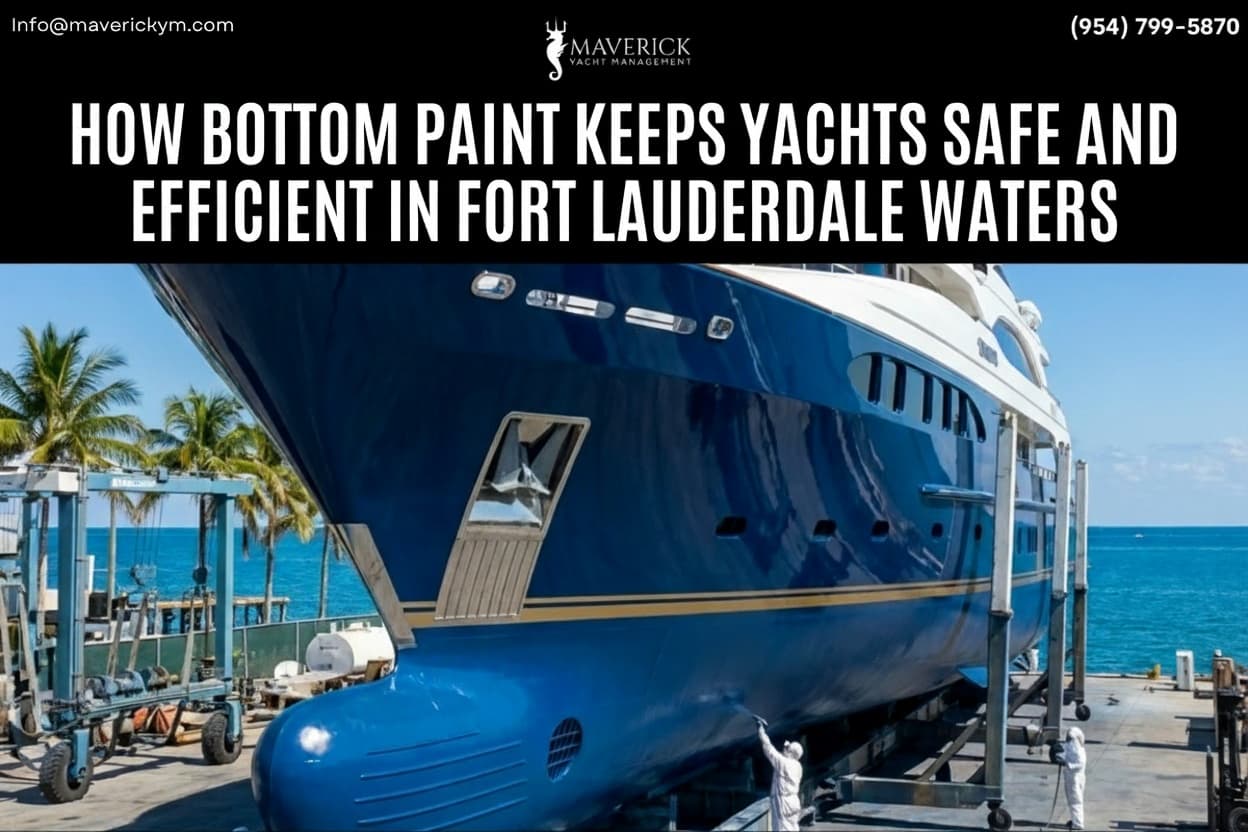
How Bottom Paint Keeps Yachts Safe and Efficient in Fort Lauderdale Waters
Fort Lauderdale’s warm saltwater creates the perfect conditions for fast marine growth. Barnacles, slime, and algae can start building up in weeks, especially near South Florida marinas where yachts stay in the water year round.
Hull fouling does not stay cosmetic for long. Extra drag can reduce handling control, raise fuel burn, and put more load on props and running gear. Small performance losses often show up first at cruising speed, where efficiency matters most.
Bottom paint for yachts in Fort Lauderdale plays a major role in daily performance and long term protection. Antifouling paint for yachts helps keep the hull cleaner, supports smoother operation, and reduces the risk of costly maintenance between haul outs.
What Bottom Paint Is (And How Antifouling Paint Works)
Bottom paint protects the hull below the waterline and helps stop marine growth from taking hold. Many yacht owners ask, what is bottom paint and why does it matter so much in Fort Lauderdale. Warm water speeds up growth, so antifouling paint becomes a key part of hull fouling prevention.
Below waterline protectionBottom paint covers submerged hull areas where growth starts fastest and spreads without warning.
Anti attachment surfaceAntifouling paint creates a coating that makes it harder for organisms to stick and multiply.
Controls barnacle buildupBarnacles add rough weight to the hull, which increases drag and reduces cruising performance.
Slows algae growth on hullAlgae forms slippery layers that trap grime, lower efficiency, and lead to more frequent cleanings.
Reduces waterline growthWaterline buildup looks small at first, yet often signals heavier growth below the surface.
How Bottom Paint Keeps Yachts Safer in Fort Lauderdale Waters
Marine growth affects more than speed. Hull drag changes how a yacht responds during docking, turning, and low speed control. Fort Lauderdale stays active year round, so captains need predictable handling near slips, bridges, and South Florida marinas. Bottom paint reduces buildup and supports safer operation in local conditions.
Improves low speed controlLess hull drag helps maintain smoother steering response while docking in tight marina lanes.
Supports safer docking approachesCleaner hull surfaces reduce unpredictable resistance when backing into slips around South Florida marinas.
Protects prop and running gearReduced growth lowers vibration, helping props and shafts run cleaner during acceleration and steady cruising.
Reduces emergency handling surprisesCleaner underwater surfaces keep performance consistent when wind, current, and traffic increase workload.
Helps with hull damage preventionFewer harsh cleanings reduce scraping risks and protect gelcoat and coatings over repeated maintenance cycles.
Adds real yacht bottom paint benefitsBetter overall reliability helps owners and crew operate with confidence during everyday Fort Lauderdale cruising.
How Bottom Paint Improves Speed and Fuel Efficiency
Warm saltwater fouling creates resistance that quietly steals performance. Slime often forms first and adds hull drag even when the hull still looks fine from the dock. Barnacles cause the biggest losses by roughening the surface and disrupting water flow. Bottom paint helps keep the hull smooth so engines can hold steady speed without extra effort.
Reduces hull drag earlySlime buildup increases friction fast, lowering cruising speed performance even before barnacles appear.
Prevents major barnacle lossesBarnacles disrupt water flow and reduce top speed, especially on performance yachts.
Supports steadier RPM rangesCleaner hull surfaces help maintain target speeds without pushing engines harder than necessary.
Improves bottom paint fuel efficiencyLess resistance reduces engine load, which lowers fuel burn on longer Fort Lauderdale runs.
Helps maintain smooth accelerationReduced growth improves response leaving the dock and improves handling through tight marina channels.
Matches Florida water conditionsBest bottom paint for Florida waters helps control growth patterns common in warm saltwater marinas.
How Often to Repaint Bottom Paint in Fort Lauderdale
Repaint timing depends on paint type, usage, and where the yacht sits between trips. Fort Lauderdale conditions push faster growth, so waiting too long often leads to heavier prep work and higher haul out costs. Smart planning keeps protection consistent and prevents surprise maintenance before peak season.
Every 12 to 18 months for heavy useFrequent cruising wears coatings faster, so repainting stays important for performance and long term protection.
Every 18 to 24 months for moderate useWeekend operation still needs a reliable haul out schedule to avoid sudden growth problems.
Every 9 to 12 months for marina kept yachtsWarm water exposure accelerates buildup, so bottom paint for yachts in Fort Lauderdale needs tighter intervals.
Every haul out for performance checksCaptains often inspect paint conditions during service to confirm coverage and avoid costly failures.
Chalky paint and thin patchesFaded areas signal worn coating and show how often to repaint yacht bottom before growth returns.
Frequent diver scrubbing needsDiver cleaning vs repainting matters because constant scrubbing can remove paint faster than expected.
Visible waterline growthWaterline buildup often points to heavier fouling below, which increases drag and maintenance costs.
Choosing the Best Bottom Paint for Florida Waters (Ablative vs Hard)
Paint choice affects how long protection lasts, how clean the hull stays, and how much prep work you face at haul out. Florida heat and saltwater demand coatings that match yacht usage, not generic one size fits all advice. A smart match prevents wasted money and early repainting.
Ablative paint for active yachtsPaint slowly wears away while running, helping reduce buildup and refresh protection over time.
Hard paint for performance hullsDurable coatings resist wear and handle frequent cleanings better, especially on faster cruising yachts.
Hybrid paint for mixed useHybrid formulas balance durability and controlled release, making them useful for varied schedules and docking.
Best match depends on usage styleYacht speed, trip frequency, and slip conditions shape the best bottom paint for Florida waters.
Ablative vs hard antifouling paint mattersWrong selection can cause faster wear, poor growth resistance, or heavy sanding at the next haul out.
Fort Lauderdale owners should prioritize growth resistance and realistic service intervals. Antifouling paint for yachts works best when a professional matches the coating to usage, hull condition, and maintenance plan.
Bottom Paint Protects Your Yacht and Your Budget
Fort Lauderdale water conditions make bottom paint a practical part of owning and operating a yacht. Clean underwater surfaces support safer handling, steadier performance, and fewer expensive surprises at haul out. Smart repainting schedules also protect hull condition and reduce long term maintenance costs.
Better control and safer docking in busy local waterways
Improved efficiency and smoother cruising with less drag
Stronger hull protection against fast marine growth
More predictable planning for haul outs and service intervals
Need help planning bottom painting & antifouling with a reliable schedule? Maverick Yacht Management offers yacht management Fort Lauderdale and yacht maintenance Fort Lauderdale services built for South Florida conditions. Request a quote today and get a plan that fits your yacht, your schedule, and your slip.
Does bottom paint stop barnacles completely?Bottom paint reduces barnacle attachment, but no coating blocks growth forever in warm Florida water.
How long does bottom paint last in Fort Lauderdale?Most yachts need repainting every 12 to 24 months, depending on paint type and marina conditions.
Can diver cleanings replace bottom painting?Diver cleanings help, but repainting still matters because scrubbing cannot restore worn antifouling coatings.
What happens if a yacht skips bottom paint for a year?Marine growth builds up faster, performance drops, and haul out prep usually becomes more expensive.
Which bottom paint works best for yachts in South Florida?Paint choice depends on usage, hull type, and cleaning frequency, so a professional recommendation saves money.
Revive Agency
Need help with your vessel?
Maverick offers free on-vessel inspections. We walk your boat, assess her condition, and send you a plan — no obligation.
Talk to a captain, not a call center.
Free vessel assessments. No commitment.
Request an Inspection (954) 799-5870